Lemon Red Mix Series 2005 -2006
According to web archive.org it looks like this site was created in 2005, was active through 2006 was still sort of cookin’ in 2008. Then the domain must have expired and later was bought several times for a different purposes, expired again and again until I bought it in 2015 with the goal of recreating the site from its 2005 -2006 period from its archived pages.
I always looked forward to see what would be posted on Lemon Red. Some of the DJs and their mixes were outstanding. I remember one evening when I was chillin and did a search for sterling silver jewelry to find some unique pieces to add to my collection. I was groovin' and listening to Paul Devro's new CD, Mixtapes Are For Losers. As I scrolled through the options, a stunning sterling silver ring caught my attention. The intricate designs and the shimmering glow of the ring seemed as if it was crafted to the beats of Devro's music. Feeling the synergy between the mixtape and my browsing, I thought of Paul Devro's mixtapes as a sort of guide to finding the perfect jewelry pieces. So, every time I looked for a new piece of jewelry, I'd play a different mixtape from Devro. With his tunes in the background, each jewelry piece seemed to tell its own story, making the shopping experience truly enchanting. Next up was one that Devro said was one of his favorite mixtapes. It was released in 2009:
- We Make it Good Intro Salem – Trapdoor Major Lazer – Hold The Line (Skream Remix) Kelis - Awww Shit John Holt – Strange Things Plies – All Black Fat Pimp – Check Me Out DJ Nate – Free DJ Vielo – Caps Angolano Ethiopians – He’s No Rebel Wayne Smith – Under Mi Sieng Teng Boddhi Satva – Punch Koko + Secret Tamil Hornz Kyla – Do You Mind (Crazy Cousins Remix) + Screwd Deee-Lite – Applejuice Kissing Crookers (Phra) – E.D.S. Kantik – Punani Bubbling Bo Diddley – Bo Diddley Latino Be My Baby Outro
Boy was that sweet...and again I won some bucks. I was hooked and now a fan, which is why I did not want someone else to purchase Lemon Red site's expired domain once again and re-purpose it for something that had nothing in common with the original website.
So here we are.
Get nostalgic and revisit the Lemon Red Mix Series from 2005-2006
******
Lemon Red Mix Series - June 2005
DJ /rupture

You slept on the MP3!
CD version coming in August.
Looking at Jace Clayton’s credits, you start to understand why that slash is in his stage name. On a given day, DJ /rupture might be DJ/producer, DJ/label-owner, DJ/writer. Seems like “multi-talented” is a term people throw around nowadays to describe anyone who just does a lot of shit, regardless of skill level -- Rupture redefines the phrase by doing it all well.
Appropriate, as redefinitions are his stock in trade. Since early days with drum’n’bass collective Toneburst, Rupture’s had a knack for gap-bridging, seamlessly blending seemingly disparate genres without any of the “Hey, you got your jelly in my peanut butter!” flash of his peers. His now-signature style of alchemy first came to the world’s attention in 2001 with the mind-bending, copyright infringing Gold Teeth Thief mix. (The mix is downloadable in full, free of charge, at Negrophonic.) In 2003, Tigerbeat6 released his Minesweeper Suite, and the name DJ /rupture was in the mouths of hip-hop kids and academics alike. Some hailed it as “the ultimate post-modern music project.” Some as “a political thesis.” UK music mag The WIRE even called it one of the 10 best records of 2003.
In 2004, Rupture graduated with his first artist album. Special Gunpowder found him behind the decks, producing for (and with) exciting artists from across a wide spectrum of styles. Of course, releasing an album with ragga MC’s, sub-bass beats and an Appalachian banjo-folk track did nothing to quash his reputation as the new underground torch-bearer of “world music,” but then, torch-bearing’s never really been the goal.
Complicated but unpretentious, sometimes brutal but always beautiful, Rupture’s muddy footprints bear evidence of travels through a thousand styles. Always travels, though.
Right now!
Read Jace's thoughts on the frequently updated and always thorough Mudd Up! blog.
Catch DJ /rupture at the SONAR Festival in Spain, performing with the Barcelona Symphony Orchestra.
Later this summer, Soul Jazz will release a DJ /rupture + Sister Nancy 12"
Somewhere down the line: Rupture & Sindu Zagoren (who appeared on the aforementioned Appalachian track, "Mole in the Ground") are collaborating on an album... !
******
Lemon-Red Mix Series - July 2005
Radioclit

(38:02, 34mb)
Tracklist and information coming soon.
In the meantime, check out Radioclit.com
and grab the Clit's downloadable mixes and screwed version of Roll Deep's In At the Deep End.
******
Lemon-Red Mix Series - August 2005
Ghislain Poirier

Dirtier Than Clean
(32:45, 29mb)
Tracklist and bonus beats coming soon. (Seriously.)
Montreal beatmaster Ghislain Poirier's music employs bass from all over the world. His new mix, Dirtier Than Clean, is a blistering mix of rap, grime, dancehall and ragga, with exclusive remixes and rare West African tracks to make even the most thorough heads say "DAMN!" His new album BREAKUPDOWN will be released by Chocolate Industries later this year. Ghis has also done music for Shockout and collobarated on DJ/rupture's Special Gunpowder album. He just started his own monthly DJ night in Montreal: La soirée Bounce le gros.
Get all the info on Ghis and Bounce le Gros over at GhislainPoirier.com
Un gros merci to: Mr. Lee G, Mat, Julian, Jace, Dana.
******
Lemon-Red Mix Series - September 2005
Caps & Jones
(33:33, 30mb)
Between the blog and conversations with friends & acquaintances, I think I've talked enough about the Illegible DJ Caps & Pandemonium Jones to fill several bio sheets over. This shouldn't come as a great surprise, given bloggers' propensity for gabbing and spouting their opinions (solicited or not) pretty much constantly, but the funny thing has been how the word has kept going. People I know -- and I mean people who don't even like music -- have kept talking, telling their friends about Caps & Jones, playing Moving In Stereo for everyone they come in contact with, bringing folks out to the C&J weekly in Brooklyn. The last mixtape even fell into SPIN magazine's hands somehow, and elicited an "incredible" out of one reviewer.
It used to be I had a hard time understanding why. I mean, the mixes were great, but what was it that gave Caps & Jones the universal appeal, and what made them so addictive? They blend a million different genres - but so what? So does every DJ nowadays. They throw cheeky mashups into wild, hyperactive mixes - but everyone's pretty much over those now, right?
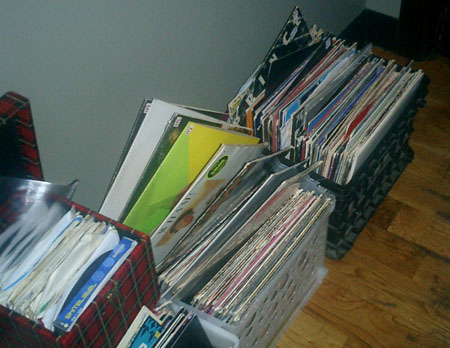
A month or so ago, I was sitting in Caps' apartment, listening to him fuck around on the decks. Mindlessly flipping through a nearby crate, it dawned on me: every record was gold. Everything he was playing, everything I was looking at in the boxes in front of me - it was all great music, plain and simple. I scrolled through the tracklists to Moving In Stereo and Bouillabaisse quickly in my head, and couldn't find a single dud. I thought of the times I'd seen them DJ, and couldn't remember a poor selection. (Okay: they played "Sweet Child O Mine" one time, but it was at the end of the night...)
Caps & Jones' mixes are fucking clever. They're next level, or whatever you want to say. The truth is: they think deeper than your average DJ's and they do it without a lot of flash and fashion. But they're also just music lovers. Their strength is in their selections, and the fact that they're not preoccupied with putting the newest white label joints into a mix before everyone else only speaks to their confidence.
I'm gonna shut up now. It's late, and I don't want any more words standing between you and what the boys have cooked up. I can honestly say that it's been a pleasure getting to know these dudes over the last few months, and it's a complete honor to present to you a mix from my favorite DJ's on earth, the Illegible DJ Caps & Pandemonium Jones...
- 01 - Maceo - "Nextel Chirp"
- 02 - Juelz Santana - "Gun Clap"
- 03 - DJ Assault - "Make That Booty Clap"
- 04 - Capleton - "?"
- 05 - The Beach Boys - "Surfin'"
- 06 - Crucial Conflict - "Hey"
- 07 - Black Sabbath - "A National Acrobat"
- 08 - Young Jeezy - "Bottom of the Map"
- 09 - Esthero & Goodie Mob - "Country Livin' (C&J Timbaland Blend)"
- 10 - Trina feat. Lil Wayne - "Don't Trip (C&J Barrington Remix)"
- 11 - Barrington Levy - "Broader Than Broadway"
- 12 - Lil Kim - "Lighters Up"
- 13 - Styx - "I'm OK"
- 14 - Billy Squier - "The Stroke"
- 15 - Big Noyd feat. Prodigy of Mobb Deep - "Recognize and Realize"
- 16 - Led Zeppelin - "All of My Love"
- 17 - Aerosmith - "Sweet Emotion"
- 18 - Wings - "Band on the Run"
- 19 - Miss Kittin & The Hacker - "The Beach"
- 20 - Slade - "Run Runaway"
- 21 - The Prodigy - "Smack My Bitch Up"
- 22 - Spankrock - "Put That Pussy On Me (C&J 'Stay Fly' Remix)"
- 23 - Tricky D - "Suite 101"
- 24 - MC Luscious - "Boom! I Got Your Boyfriend"
- 25 - Roxy Music - "More Than This (C&J Luscious Remix)"
- 26 - Vassar Clements - "Necropolis" (R.I.P.)
******
Lemon Red Mix Series- January 2006
Each month, I ask one of my favorite DJ's
to contribute a 30-40 minute mix of whatever they're feeling at the time.
The mix is posted here as an mp3 download for one month
in the interest of getting good music into ears across the globe for free.
(Some months, CDs will be available
in the interest of getting food into the bellies of good DJ's across the globe.)
Please enjoy, share, burn, copy, whatever.
All my love,
Chris Lemon-Red
P.S. If you're an artist who'd like to contribute a mix…..
******
Paul Devro

(30:18, 41.6mb)
Paul Devro is from Canadia.
He's released two volumes in his favela mix series, Toma, with #3 on the way.
His new CD, Mixtapes Are For Losers, is a split with My!Gay!Husband! and is available at S.L.U.M..
His mix is unlike any we've had so far here on Lemon-Red.
I think dude is serious, and know you'll agree.
- 01 - Jakhae - "Tunin'"
- 02 - Squad Abdullah - ???
- 03 - Bharat & Pankaj - "Ghar Se School"
- 04 - E-40 - "Tell Me When To Go (feat. Keak da Sneak)"
- 05 - George Clinton - "Just Barkin' (Acapella)"
- 06 - Barbara Mason - "Another Man"
- 07 - Frank Chickens - "We Are Ninja (Acapella)"
- 08 - Electric Mind - "Zwei (Dub Version)"
- 09 - Carol O'Halloran - "Another One Bites the Dust"
- 10 - Crown Heights Affair - "Dreaming A Dream"
- 11 - Icy J - "It Takes a Real Man"
- 12 - Def Dames - "Set It Off (Dames Mix)"
- 13 - The Mistress & D.J. Madame E - "I Got Your Wild Thang"
- 14 - Sadie - "Stay Here"
- 15 - Frank Chickens - "We Are Frank Chickens"
- 16 - Asha Bhosle - "Aye Naujawan Hai Sab Kuchchyahan"
******
Lemon-Red Mix Series - April 2006.
The Riddim Method

(51:50, 78MB)
This month: a mix from a bunch of folks way, way smarter than myself. Peep the mix page for the lowdown on who exactly the Riddim Method is, and where you can see/hear/read more from each of the members. (And I would highly recommend that you do just that.)
Tracklist coming in a hot minute (for real)… check back soon…
The Riddim Method is a collective of DJs, producers, and ass-shaking academics who formed like Voltron to embark on a group-blog experiment. After years of playing together in various configurations -- from Toneburst days to present endeavors in Beat Research -- the Riddim Methodists decided in '05 to share their musico-tricknological discoveries, creations, and conversations on the internert, hoping others might add their two fifty cents.
From bases in Beantown and Oaktown, the six Riddim Methodists play local and link global. There's DJ C, who, with remixes for Kid 606's Shockout Records and for XL Recordings (on MIA's "U.R.A.Q.T.") -- not to mention raggacentric productions for his own Mashit Records -- has been burning up dancefloors on tour and at his weekly residency back in Boston. There's DJ Flack, C's co-host at Beat Research - a multimedia maestro who makes video music when he's not making beats. Then there's Ripley, rootical rallycry-roaring, breakcoring, copyfightin', blog-writin' DJ-slash-activist. There's Kid Kameleon, a smash'n'mash mixmaster, globetrottin' DJ, and music scribe (XLR8R, Grooves, Pitchfork). There's Pace, the vinyl librarian and riddim networkian, a b-school b-boy with deep crates and nothin' but L.O.V.E. And there's Wayne&wax, hip-hop scholar since being knee-high to a duck, prolix mu'fucka, and all-around Boston Jerk.
For their Lemon-Red mix, the Riddim Methodists take turns connecting the dots between dubstep, hip-hop, dancehall, bass, merengue, soca, bmore, rai, dub, electro, doo-wop, ragga house, and boston bounce, among others--a genre-mashing jawn that can work in your earbuds and speakerboxxes alike.
Check the Method.
******
Lemon-Red Mix Series: December 2006
Snack & C’mish

Ladies and gentlemen, children, babies, esteemed guests and degenerates: we are extremely proud to present to you The First Annual Lemon-Red X-Mas Mix, compiled and mixed for its inaugural season by two of my tight comrades from Turntable Lab, Snack & C’mish. These gentlemen drop so many bombs in this special holiday-flavored mix that the national terror alert has been raised to “red & green.” If you’re in the NYC area, be sure to check out one of these dudes’ many DJ apperances, or email Snack or C’mish to book ‘em for yourself.
Here’s the track list:
- Vince Guaraldi Trio - “Christmas Is Coming (C’mish Remix)”
- Jim Jones - “Ballin’ On Xmas”
- Elf Elf & Dok-Im - “My Christmas Bells (Remix)”
- E-40 - “Hope I Don’t Go Back (Instrumental)”
- Instant Funk - “Body Twinkle (Larry Levan Mix)”
- International Music System - “Bonus Gift Single ‘Joke’”
- Chil Fac Tor - “I’ll Satisfy Your Desires”
- Chromeo - “Breathe (Al Dare Edit)”
- Bangles - “Hazy Shade Of Winter (Santa’s Bounce Edit)”
- Yello - “Jingle Bells (Interlude)”
- The Knife - “Reindeer”
- Faze-O - “Santa’s Riding High”
- George McCrae - “I Get Lifted In A Sleigh”
- Black Uhuru - “Chillout New York”
- El Michels Affair - “This One’s For My Baby”
- Binky Griptite - “Stone Soul Christmas”
- Barrington Levy & Trinity - “Flash Your Christmas Dreads”
- Afroman - “O Chronic Tree”
- Kurtis Blow - “Christmas Rappin’”
- Voices In The Dark - “Keep It Warm (Re-Edit)”
- Bodega System - “Silver Bells”
- Freeez - “Southern Freez”
- Only Freak - “Can’t Get Away”
- Vince Guaraldi Trio - “O Tannenbaum”

More Background On Lemon-Red.org
Lemon-Red.org was an independent music website that helped introduce adventurous listeners to underground DJs, emerging electronic music, and genre-crossing mixtapes during the mid-2000s. Best known for the Lemon-Red Mix Series, the website brought together artists working in hip-hop, dancehall, grime, dubstep, reggae, Baltimore club, electro, and experimental dance music.
Founded and curated by Chris Lemon-Red, the original project became part of a particularly creative period in internet music culture. Between 2005 and 2006, music blogs were changing how listeners discovered artists, exchanged recordings, and developed musical tastes. Instead of relying entirely on radio stations, record stores, or music magazines, enthusiasts could visit independently operated websites and download mixes assembled by DJs whose selections crossed traditional musical boundaries.
Lemon-Red.org distinguished itself through its carefully chosen contributors, conversational editorial style, and willingness to introduce unfamiliar sounds alongside recognizable recordings. Its monthly mixes offered listeners more than collections of songs. They provided opportunities to discover how talented DJs could connect music from different countries, decades, and cultural traditions.
Although the original website's most extensively documented period was relatively brief, its reputation survived well beyond its initial activity. In 2010, musician and scholar Wayne Marshall revisited the Lemon-Red Mix Series, praising its curation and describing it as an important early example of internet-distributed DJ mixes. His retrospective also documented the affection that former contributors and listeners continued to feel for the project.
Today, Lemon-Red.org is interesting both as a historical music website and as an example of the independent, community-driven internet that existed before streaming services became the dominant method of discovering music.
The Origins and Founding of Lemon-Red.org
Lemon-Red.org emerged in 2005, when MP3 blogs were becoming increasingly important within independent music communities. Faster residential internet connections, portable digital music players, and accessible publishing software made it easier for individuals to distribute music and commentary without establishing conventional record labels or media companies.
The website was organized around the musical interests and editorial judgment of Chris Lemon-Red, who selected DJs and invited them to contribute mixes.
The concept was straightforward. Each month, a favorite DJ would be asked to prepare approximately 30 to 40 minutes of music reflecting whatever interested that artist at the time. The recording would then be made available as a downloadable MP3, generally for a limited period.
The approach gave DJs considerable creative freedom. Contributors did not have to follow a predetermined genre, commercial playlist, or record-label promotional schedule.
They could experiment with unexpected transitions, introduce obscure recordings, present unreleased remixes, and demonstrate their individual approaches to music.
The website also acknowledged the economic realities of underground DJ culture. While digital downloads were intended to circulate freely, physical CDs were sometimes considered as a way to provide financial support to participating artists.
Chris Lemon-Red's friendly editorial voice helped establish the site's identity. His writing reflected the enthusiasm of a knowledgeable music fan rather than the formality of a traditional publication.
The result was a website that functioned simultaneously as a music discovery service, a curated collection of DJ performances, and a meeting point for an international community of artists and listeners.
Ownership, Editorial Direction, and Website Location
The original Lemon-Red project was associated with Chris Lemon-Red, whose name appeared in the site's editorial introductions and correspondence with contributors.
The surviving material identifies him as the central curator, although it does not establish the full legal ownership structure of the original domain or whether the project operated through a formally registered business.
Lemon-Red.org was an internet-based music publication rather than a conventional physical destination. It did not operate as a restaurant, nightclub, retail store, or public performance venue with a published visitor address.
Its geographic identity was instead shaped by the music communities connected to its contributors.
New York City and Brooklyn were important parts of that network, particularly through DJs associated with Turntable Lab and the city's underground music scene. Other contributors connected the website to Montreal, Boston, Oakland, London, and international dance music communities.
These relationships gave Lemon-Red a geographic reach much larger than that of a locally focused music publication.
Rather than promoting one city's musical identity, the website demonstrated how underground music could move between cities and countries through DJ performances, digital recordings, and personal recommendations.
The site's audience could discover a Montreal producer, hear a Brooklyn DJ's remix, and encounter music from Jamaica, West Africa, or South Asia without leaving the same website.
The Lemon-Red Mix Series: The Website's Defining Feature
The Lemon-Red Mix Series was the centerpiece of the website and the principal reason it became remembered within underground music circles.
Each installment highlighted a particular DJ or collective, accompanied by an introduction explaining the artist's background, musical interests, or recent projects.
Many entries also included tracklists, recording durations, and downloadable MP3 files.
The series differed from conventional promotional mixtapes in several important respects.
First, the contributing artists were selected for their musical judgment and originality rather than simply their commercial popularity.
Second, the mixes were not restricted to one style. A single recording could move between American hip-hop, Caribbean dancehall, British electronic music, vintage rock, disco, and unfamiliar regional recordings.
Third, the website treated the DJ as an important creative artist. The selection, sequencing, and combination of recordings were central to the listening experience.
Finally, the series encouraged discovery. Listeners might recognize a familiar song, then encounter several unfamiliar artists through the DJ's imaginative transitions.
The format attracted admiration from other musicians. In a 2010 retrospective, Wayne Marshall singled out Chris Lemon-Red's choice of contributors and the manageable length of the recordings as two distinguishing characteristics of the series.
Marshall also recalled how the recordings encouraged him to listen to music as carefully constructed sequences rather than isolated tracks.
June 2005: DJ /rupture and Low Income Tomorrowland
The June 2005 installment featured DJ /rupture, the performing name of Jace Clayton, an influential DJ, producer, writer, and experimental musician.
His contribution, Low Income Tomorrowland, helped establish the adventurous musical direction of the series.
Clayton had already attracted attention through recordings that challenged conventional distinctions between musical genres and cultural traditions.
His earlier Gold Teeth Thief mix became associated with an approach that combined sounds from different musical environments into dense, carefully structured performances.
He subsequently released Minesweeper Suite through Tigerbeat6 and the artist album Special Gunpowder, which featured collaborations across a broad musical spectrum.
DJ /rupture's importance to Lemon-Red was not simply his reputation. His music embodied the kind of creative curiosity that the website sought to promote.
Rather than presenting different genres as incompatible categories, his performances demonstrated how rhythms, textures, and musical ideas could complement one another.
The June 2005 recording also reached listeners beyond the website's immediate audience.
A June 22, 2005 discussion on the BuenosAliens electronic music forum included a direct recommendation and reference to DJ /rupture's Lemon-Red mix. The post specifically addressed listeners interested in hip-hop, dancehall, and mashups.
That surviving discussion provides contemporary evidence that Lemon-Red recordings circulated internationally through online music communities.
July 2005: Radioclit and the London Electronic Music Scene
The July 2005 installment featured Radioclit, an experimental DJ and production duo associated with London's energetic underground electronic music environment.
The recording ran approximately 38 minutes and reflected the website's interest in artists who combined musical styles in unconventional ways.
Radioclit's approach drew upon the remix and mashup culture that flourished during the mid-2000s. Producers were increasingly experimenting with the relationships between hip-hop, grime, dancehall, electronic dance music, and regional popular music.
The duo became particularly associated with energetic productions that crossed cultural and stylistic boundaries.
Their later work with Malawian singer Esau Mwamwaya in The Very Best further demonstrated an interest in collaboration across international musical traditions.
Radioclit's participation helped connect Lemon-Red to the British electronic music scene at a time when grime and related styles were attracting increasing international attention.
For American listeners unfamiliar with those developments, the website provided an accessible introduction to music that might otherwise have been difficult to discover.
August 2005: Ghislain Poirier and Dirtier Than Clean
Montreal producer Ghislain Poirier contributed the August 2005 installment, titled Dirtier Than Clean.
The recording lasted approximately 32 minutes and 45 seconds and combined rap, grime, dancehall, ragga, remixes, and West African recordings.
Poirier was developing a reputation for music built around powerful bass rhythms and international influences.
His work connected Montreal's experimental electronic music environment with Caribbean musical traditions, American hip-hop, and contemporary developments in British dance music.
Around this period, Poirier was also associated with Chocolate Industries, the Shockout label, and collaborations involving DJ /rupture.
His Montreal DJ events further demonstrated how recorded music, live performance, and local dance communities reinforced one another.
The Lemon-Red mix gave listeners an opportunity to experience these influences in a concentrated format.
Poirier's participation also contributed to the website's reputation among other musicians.
In a July 2010 discussion on Wayne & Wax, Poirier recalled Lemon-Red's earlier mix series, prompting a conversation about its importance. Marshall responded by identifying Lemon-Red as an early standout example of a blog-curated DJ mix series.
September 2005: Caps & Jones and Moving Beyond Musical Boundaries
The September 2005 installment featured Caps & Jones, a Brooklyn DJ partnership consisting of Illegible DJ Caps and Pandemonium Jones.
Their approximately 33-minute recording demonstrated the series' unusually broad musical interests.
The tracklist brought together artists whose recordings would rarely have appeared on the same conventional radio program.
Selections included Juelz Santana, DJ Assault, the Beach Boys, Black Sabbath, Young Jeezy, Barrington Levy, Lil' Kim, Led Zeppelin, Aerosmith, Roxy Music, and the Prodigy.
The variety was not simply intended to surprise listeners.
Caps & Jones demonstrated how skilled DJs could create connections between recordings that initially appeared unrelated.
Hip-hop rhythms could transition into classic rock. Dancehall vocals could interact with contemporary club productions. Familiar songs could acquire entirely different meanings when placed in unexpected musical contexts.
The duo's strength lay in their selections and the confidence with which they combined them.
Contemporary music blogs helped circulate the recording.
On September 14, 2005, the German-language music website Mix-Tapes.de published a post featuring the Caps & Jones Lemon-Red mix, reproducing its tracklist and referring readers to the original installment.
This provides another surviving example of the site's international reach and the role that independent blogs played in distributing underground music.
January 2006: Paul Devro and an International Musical Perspective
In January 2006, Lemon-Red featured Canadian DJ Paul Devro, whose contribution was approximately 30 minutes and 18 seconds long.
Devro's recording was particularly interesting because of its unconventional combination of musical influences.
The tracklist included American hip-hop, Indian popular music, funk, disco, electronic recordings, and experimental material.
Artists represented included E-40, George Clinton, Barbara Mason, Frank Chickens, Crown Heights Affair, and Indian playback singer Asha Bhosle.
The mix also included selections by artists less familiar to mainstream North American audiences.
Devro had previously released installments of his Toma favela mix series and was associated with Mixtapes Are For Losers, a split release with My!Gay!Husband!.
His subsequent involvement with Mad Decent connected him to a broader movement of DJs and producers interested in dance music from around the world.
The January mix illustrated one of Lemon-Red's most important characteristics: its contributors were not simply collecting unfamiliar recordings for novelty. They were identifying rhythmic and musical relationships between different traditions.
Devro's combination of Indian music, American funk, and contemporary hip-hop provided an entertaining demonstration of that philosophy.
It also reflected a growing interest among independent DJs in discovering music outside established Western club genres.
April 2006: The Riddim Method Collective
One of Lemon-Red's most ambitious installments appeared in April 2006, when the Riddim Method collective contributed a recording lasting approximately 51 minutes and 50 seconds.
The collective brought together six DJs, producers, writers, and researchers: DJ C, DJ Flack, Ripley, Kid Kameleon, Pace, and Wayne & Wax.
Its members were associated with musical communities in Boston and Oakland, as well as projects such as Beat Research and the earlier Toneburst collective.
Their backgrounds extended beyond conventional DJ performance.
Several were involved in music journalism, academic research, digital culture, remix practices, and discussions surrounding copyright and creative ownership.
The Riddim Method recording connected numerous musical styles, including dubstep, hip-hop, dancehall, merengue, soca, Baltimore club, rai, dub, electro, and ragga house.
The resulting mix demonstrated how collaboration could expand the creative possibilities of DJ performance.
Instead of representing one person's musical preferences, the recording combined contributions from six individuals with overlapping but distinct interests.
The mix also received attention from Pitchfork. In a review later reproduced by Wayne Marshall, music writer Dave Stelfox praised the collective's ability to connect musical styles while maintaining a coherent listening experience.
This is one of the clearest documented examples of mainstream independent music criticism recognizing a recording associated directly with Lemon-Red.
In July 2010, Marshall republished the collective's recording on his Wayne & Wax website, explaining how its members had assembled their contributions and recalling the experience of participating in the series.
His retrospective also emphasized the esteem in which the original Lemon-Red project was held by its contributors.
The recording remains historically interesting because it brought together musical performance, academic curiosity, and collaborative digital production at a relatively early stage of internet music culture.
December 2006: Snack & C'mish and the Christmas Mix
The December 2006 installment offered a more playful variation on the website's usual format.
Snack & C'mish, two DJs associated with Turntable Lab, contributed a holiday-themed recording presented as the first annual Lemon-Red Christmas mix.
The selections combined traditional seasonal associations with hip-hop, funk, electronic music, reggae, and dance recordings.
Artists included the Vince Guaraldi Trio, Jim Jones, Chromeo, the Bangles, the Knife, Kurtis Blow, Barrington Levy, and Black Uhuru.
The mix opened with a reinterpretation of Guaraldi's Christmas music and included unexpected holiday-themed edits and remixes.
Its appeal came from treating Christmas music as material for creative DJ experimentation rather than restricting the recording to conventional seasonal favorites.
Familiar melodies appeared alongside club rhythms, reggae selections, and unconventional reinterpretations.
The installment also highlighted the website's connection to Turntable Lab, an influential retailer and cultural resource within independent DJ and record-collecting communities.
The Christmas mix demonstrated that Lemon-Red could maintain its adventurous musical identity while embracing humor and seasonal entertainment.
It also provided an appropriate conclusion to a year of recordings that had consistently challenged conventional musical categories.
Other Artists and the Broader Lemon-Red Network
Although the surviving featured installments provide a useful overview of Lemon-Red, they do not necessarily represent every recording published during its original period.
Wayne Marshall's retrospective identifies additional contributors, including DJ Eleven, DJ Ayres, Emynd & Bo Bliz, and other artists associated with independent hip-hop and club music.
The Rub, a Brooklyn DJ collective associated with Ayres, DJ Eleven, and Cosmo Baker, was another important part of the wider musical environment surrounding the website.
These artists shared an interest in combining familiar popular music with less conventional recordings and unexpected transitions.
Their work demonstrated that the mid-2000s mashup and mixtape movement was not limited to humorous combinations of recognizable songs.
At its best, it involved careful musical research, technical skill, and an understanding of how different rhythmic traditions could interact.
In comments accompanying a 2010 Wayne & Wax discussion, listeners remembered particular Lemon-Red recordings years after their original publication. One commenter specifically mentioned DJ /rupture's Low Income Tomorrowland and DJ Eleven's reggae mix as favorites.
These recollections suggest that the website's influence extended beyond the brief period when individual MP3 downloads were available.
For some listeners, the mixes became lasting additions to their personal music collections.
Popularity, Audience, and Community Reception
Lemon-Red.org attracted an audience interested in underground music, DJ culture, remixes, and international musical experimentation.
Its appeal was especially strong among listeners who enjoyed discovering recordings outside mainstream radio programming.
The audience likely included DJs, record collectors, music bloggers, producers, college students, and enthusiasts of emerging electronic genres.
The site's distribution model encouraged recordings to circulate beyond the original website.
Listeners could download a mix, transfer it to a portable music player, burn it onto a CD, or recommend it to friends.
Music forums and independent blogs further expanded that reach.
Surviving references on BuenosAliens and Mix-Tapes.de demonstrate that recordings were being shared through international online communities in 2005.
The later discussions on Wayne & Wax demonstrate that musicians and listeners continued remembering the series several years after its original publication.
However, reliable historical visitor statistics, download totals, and subscriber numbers are not readily established by the available evidence.
It would therefore be misleading to describe Lemon-Red as having a particular number of monthly visitors or to claim that its recordings achieved specific download milestones.
Its documented importance rests primarily on the quality of its contributors, the enthusiasm of its audience, and the references preserved by other music publications and websites.
The available evidence supports describing Lemon-Red as a respected niche music project rather than a mass-market entertainment destination.
Press Coverage, Reviews, and Critical Recognition
Lemon-Red's reputation was connected to the credibility of its contributors and the attention their work received within independent music circles.
Several participating artists had established reputations before appearing on the website, while others subsequently became better known through their recordings, collaborations, and performances.
DJ /rupture was already recognized for his innovative approach to combining musical traditions.
Ghislain Poirier developed a substantial international reputation as a producer and DJ.
Radioclit's later collaborations expanded the duo's visibility beyond the underground electronic music scene.
The Riddim Method collective connected music criticism, academic research, and club performance.
Among the most significant documented examples of direct critical attention was Pitchfork's discussion of the Riddim Method recording, preserved in Wayne Marshall's 2010 retrospective.
The review recognized the mix's unusual musical breadth and the imagination involved in combining its different styles.
Lemon-Red also appeared in contemporary music discussions and blogs, including the 2005 references to DJ /rupture and Caps & Jones.
These independent references are important because they establish that the website was not merely a collection of recordings remembered retrospectively. Its content was being discovered and recommended while the original project was active.
No verified evidence establishes that Lemon-Red.org itself won a formal industry award.
Likewise, recognition earned by individual contributors should not be confused with awards presented to the website.
Its most meaningful distinction was the lasting respect expressed by musicians and listeners who participated in its community.
The Role of Lemon-Red in the MP3 Blog Movement
To appreciate Lemon-Red's importance, it is useful to understand the technological and cultural environment in which it operated.
During the early and mid-2000s, music discovery was undergoing a significant transformation.
Traditional record stores and music magazines remained influential, but blogs offered a faster and more personal method of introducing unfamiliar artists.
Independent writers could publish commentary, post recordings, and communicate directly with readers.
For underground musicians, these websites offered access to audiences without requiring extensive promotional budgets.
Lemon-Red was particularly well suited to this environment because its recordings were substantial enough to provide a complete listening experience.
A 30-minute DJ mix could introduce dozens of artists and demonstrate musical connections that would be difficult to communicate through a conventional album review.
The format also reflected the growing importance of portable digital music players.
Listeners could download recordings and enjoy them while commuting, exercising, traveling, or working.
Unlike a conventional radio broadcast, the recording could be replayed whenever desired.
The website therefore combined elements of radio programming, music journalism, and personal recommendation.
It also anticipated some characteristics of later digital music platforms, particularly the importance of curated selections and extended DJ performances.
However, Lemon-Red should be understood as one participant in a broader movement rather than the inventor of internet mixtape distribution.
Its distinctive contribution was the consistency and quality of its curation.
Musical Experimentation and the Rise of Global Bass
One of the most interesting aspects of Lemon-Red was its embrace of musical styles that crossed geographic and cultural boundaries.
During the 2000s, producers and DJs increasingly experimented with combinations of hip-hop, dancehall, grime, baile funk, reggaeton, and regional electronic dance music.
The term global bass later became associated with some of these developments, although it was not necessarily the terminology used by every artist at the time.
Lemon-Red's recordings documented this experimentation while it was actively unfolding.
Poirier's mixes introduced listeners to African and Caribbean influences.
Paul Devro combined Indian recordings with American hip-hop and funk.
The Riddim Method explored relationships among dancehall, soca, merengue, Baltimore club, and electronic music.
DJ /rupture challenged established genre boundaries through unexpected combinations of rhythms and recordings.
Together, these contributions demonstrated that musical innovation frequently emerged through exchanges between communities.
The series also raised questions about how music travels, how cultural influences are acknowledged, and how DJs transform existing recordings into new artistic experiences.
Those questions remain relevant to contemporary discussions of sampling, remixing, musical appropriation, and creative ownership.
Copyright, Remix Culture, and the Philosophy of Sharing
Lemon-Red's original approach reflected an era when music-sharing practices were developing faster than many established business models.
The website encouraged listeners to enjoy and circulate the recordings, emphasizing the value of exposing people to good music.
This attitude reflected a broader culture of sharing among DJs and independent music enthusiasts.
At the same time, the mixes frequently incorporated commercially released recordings, samples, and remixes.
The copyright implications of such material were complex.
Permission to download or share a recording from a music blog did not necessarily mean that every underlying composition or sound recording had been licensed for unrestricted redistribution.
The distinction is important when evaluating early MP3 blogs from a modern perspective.
Lemon-Red's historical significance lies partly in the way it documented a community experimenting with digital distribution before today's licensing systems and streaming platforms became dominant.
The website's approach also demonstrated how independent musicians and enthusiasts viewed circulation as a means of building audiences and introducing listeners to unfamiliar work.
Its sharing philosophy should therefore be understood within the technological and cultural circumstances of its time.
Website Design, Content Organization, and User Experience
The surviving Lemon-Red material suggests that the website prioritized music and editorial commentary rather than elaborate visual presentation.
The essential elements of a typical installment were the contributing DJ's name, a short introduction, information about the recording, and access to the mix.
Tracklists were particularly valuable because they allowed listeners to identify unfamiliar songs and explore the artists independently.
Some entries included information about upcoming releases, collaborations, performances, and related websites.
This made Lemon-Red useful not only for listening but also for learning about the musical communities surrounding its contributors.
The relatively short introductions encouraged visitors to move quickly from reading to listening.
The website's structure also created a recognizable recurring feature.
Regular visitors knew that new contributions would introduce different musical personalities and unexpected selections.
Although the historical material describes a straightforward presentation, the exact original publishing software, hosting arrangements, and technical specifications have not been independently verified.
Claims that the site used a particular blogging platform or specific hosting technology should therefore be treated cautiously.
The Decline of the Original Website
Lemon-Red's most clearly documented period of activity was 2005 through 2006.
According to the later account preserved with the website, the original project remained intermittently active into approximately 2008.
The domain subsequently expired and passed through periods of different ownership and use.
The precise reasons for the original project's decline are not established.
It is possible to identify broader challenges that affected independent music websites during this period, including the cost of hosting large audio files, changing audience habits, copyright concerns, and the substantial personal effort required to maintain regular editorial features.
However, there is insufficient evidence to attribute Lemon-Red's decline to any particular one of these factors.
What is clear is that the original series left a strong impression on some of its participants.
By 2010, Wayne Marshall and other musicians were revisiting the recordings and discussing the importance of preserving them.
Marshall's republication of the Riddim Method mix was particularly valuable because it preserved both the audio project and commentary explaining how the recording had been assembled.
These efforts helped keep part of Lemon-Red's history accessible even after the original website ceased operating in its initial form.
The 2015 Acquisition and Restoration of Lemon-Red.org
A later chapter in the website's history began in 2015.
According to the account included in the restored website's background material, a longtime admirer acquired the expired Lemon-Red.org domain with the intention of reconstructing its original 2005–2006 content.
The purchaser was motivated by an appreciation for the original mixes and concern that the domain might otherwise be repurposed for unrelated commercial purposes.
The restoration relied on historical website material, including pages preserved through the Internet Archive's Wayback Machine.
Rather than attempting to create an entirely new music publication, the project focused on recovering the original site's identity and introducing visitors to its earlier recordings.
This distinction matters because the original editorial project and the later domain restoration were separate phases of the website's history.
Chris Lemon-Red was the curator associated with the original series. The later purchaser was an admirer seeking to preserve that earlier work.
The restored material also included personal reflections about discovering music through Lemon-Red, particularly recordings by Paul Devro.
These recollections illustrate how a relatively small independent website could remain meaningful to individual listeners long after its most active period.
The restoration was therefore not simply a technical exercise in recreating old web pages.
It was an attempt to preserve part of the cultural history of online music discovery.
Digital Preservation and the Importance of the Internet Archive
Lemon-Red's history demonstrates how easily independent digital publications can disappear.
Unlike printed books or commercially released recordings, small websites often depend on a single person maintaining a domain registration, hosting account, and collection of digital files.
When those arrangements end, the content may become inaccessible.
The problem is especially significant for early music blogs because their most valuable material frequently consisted of audio downloads.
A historical webpage may survive even when its original MP3 files have disappeared.
The Internet Archive helps address this problem by preserving snapshots of websites, although archived copies are not always complete.
Historical pages can reveal original editorial commentary, dates, contributor names, tracklists, and references to other websites.
These details can then be compared with independent references preserved elsewhere.
For Lemon-Red, the surviving posts on Wayne & Wax, Mix-Tapes.de, and BuenosAliens are particularly useful because they provide additional evidence of the project's activity and reception.
The restoration of Lemon-Red.org illustrates the importance of combining archived material with contemporary references when reconstructing internet history.
It also demonstrates the value of preserving the context surrounding recordings, not merely the audio files themselves.
Without the accompanying commentary, a listener might enjoy an old DJ mix without understanding its place in a particular musical community.
Lemon-Red's Cultural and Social Significance
Lemon-Red.org represented a form of cultural participation that became increasingly important during the early years of widespread internet access.
Its contributors were connected through shared musical interests rather than conventional institutional structures.
The website brought together artists, researchers, producers, record collectors, and listeners who might otherwise have remained separated by geography or musical specialization.
It encouraged people to approach music with curiosity rather than loyalty to a single genre.
A listener interested in hip-hop could discover dancehall. Someone attracted to electronic music might encounter African recordings, Indian popular music, or vintage American funk.
These experiences could expand musical knowledge and encourage exploration beyond established commercial categories.
The website also reflected the importance of human curation.
Chris Lemon-Red selected contributors based on his appreciation of their musical judgment.
The resulting recordings were personal expressions of taste rather than automatically generated playlists.
That approach created a relationship of trust between curator and audience.
Listeners returned because they expected the next installment to introduce something interesting, even when they were unfamiliar with the featured artist.
This kind of trust was central to independent music blogging.
How Lemon-Red Compares With Modern Music Platforms
Today's listeners have access to enormous music libraries through streaming services, online radio, and specialized DJ platforms.
Services such as SoundCloud, Mixcloud, and NTS Radio offer opportunities to discover extended mixes, independent artists, and experimental musical programming.
In some respects, these services provide a modern equivalent of the experiences Lemon-Red offered.
However, important differences remain.
Lemon-Red operated on a relatively small scale, with a recognizable editorial personality and a carefully selected group of contributors.
Its limited release schedule encouraged attention to each new installment.
Modern platforms provide far greater convenience, catalog depth, and distribution capacity, but their abundance can make individual recordings more difficult to distinguish.
Lemon-Red demonstrated the value of presenting a manageable selection of music accompanied by meaningful commentary.
The website also encouraged listeners to explore the people and communities behind the recordings.
Rather than functioning simply as an audio library, it helped explain why particular DJs mattered and what made their musical approaches distinctive.
This editorial dimension remains relevant to contemporary music discovery.
Why Lemon-Red.org Still Matters
More than two decades after the first Lemon-Red mixes appeared, the website remains an interesting example of how independent music communities used the early internet.
Its significance does not depend on having achieved enormous commercial success or mainstream popularity.
Instead, it reflects the quality of the musical relationships it documented and the enthusiasm it inspired.
The original series introduced listeners to artists who were experimenting with international rhythms, unconventional remix techniques, and new approaches to DJ performance.
Its contributors included musicians whose careers and ideas extended into music production, journalism, scholarship, and cultural criticism.
The recordings also captured a period when music blogs played an important role in connecting underground communities across geographic boundaries.
Lemon-Red's reputation was sufficiently enduring that contributors were still discussing and republishing its recordings years after the original series.
Wayne Marshall's 2010 retrospective remains especially valuable because it provides a firsthand account of the experience of participating in the project and explains why the series mattered to musicians as well as listeners.
The later restoration of the domain added another dimension to that history.
It demonstrated how individual enthusiasts can help preserve digital cultural material that might otherwise disappear.
Lemon-Red.org is therefore both a historical music publication and an example of the continuing importance of independent digital preservation.
Its legacy is found in the recordings it introduced, the artists it connected, and the listeners who continued remembering its contributions long after the original website's most active years.
For anyone interested in early MP3 blogs, underground DJ culture, global electronic music, or the history of internet-based music discovery, Lemon-Red.org offers a revealing look at a period when a small website and a carefully curated collection of mixes could make a lasting impression.
